Dr.Ali Nemati
Surgeon and specialist in neurology, spine and lumbar disc diseases with laser



Dr.Ali Nemati
Surgeon and specialist in neurology, spine and lumbar disc diseases with laser
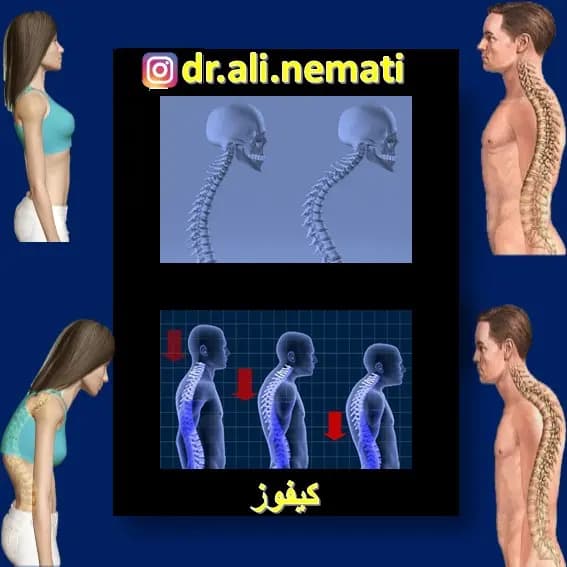
Kyphosis: Excessive Curvature of a Segment of the Spine
Kyphosis refers to an excessive forward curvature of the thoracic spine. When this curvature becomes exaggerated, it may lead to a rounded back, pain, and limited mobility. One of the most common structural causes in adolescents is Scheuermann’s Kyphosis. According to Dr. Ali Nemati, this condition occurs due to asymmetric growth of the vertebral endplates during adolescence, resulting in wedge-shaped vertebrae and forward bending of the spine. It is a major cause of back pain among teenagers. ________________________________________ Etiology & Pathophysiology • Uneven growth of vertebral endplates • Possible genetic component • Weakness of the vertebral bone during the pre-pubertal period • Development of wedge-shaped vertebrae (≥ 5 degrees in at least three consecutive vertebrae) Most commonly affects the thoracic spine, but lumbar involvement may cause more pain and stiffness. ________________________________________ Clinical Symptoms Typically appears between ages 10–15: • Noticeable rounded back or hunching • Muscle stiffness and fatigue • Back pain aggravated by activity or prolonged sitting • Limited flexibility • Muscle spasms • Cosmetic concerns (shoulder asymmetry, prominent spine) Severe cases may result in: • Reduced lung capacity • Chronic pain • Significant postural deformity ________________________________________ Diagnosis Diagnosis is based on: • Kyphotic angle > 45 degrees • At least three adjacent vertebrae with ≥ 5 degrees of wedging • X-Ray as the primary diagnostic tool • MRI in selected cases ________________________________________ Treatment Depends on severity, flexibility, remaining growth, and patient symptoms. ✔ Non-surgical treatment • Physical therapy with stretching and strengthening exercises • Postural correction programs • Aerobic low-impact exercises • Bracing (TLSO or Milwaukee brace), especially effective in growing adolescents ✔ Surgical treatment Indicated for: • Curvature > 70–80 degrees • Severe or persistent pain • Cardiopulmonary compromise • Significant cosmetic deformity Surgery involves spinal fusion with instrumentation to correct and stabilize the curvature. Return to full sports activity is usually allowed after 12 months.