د. علي نعمتي
جراح و متخصص في أمراض الأعصاب والعمود الفقري والقرص القطني بالليزر



د. علي نعمتي
جراح و متخصص في أمراض الأعصاب والعمود الفقري والقرص القطني بالليزر
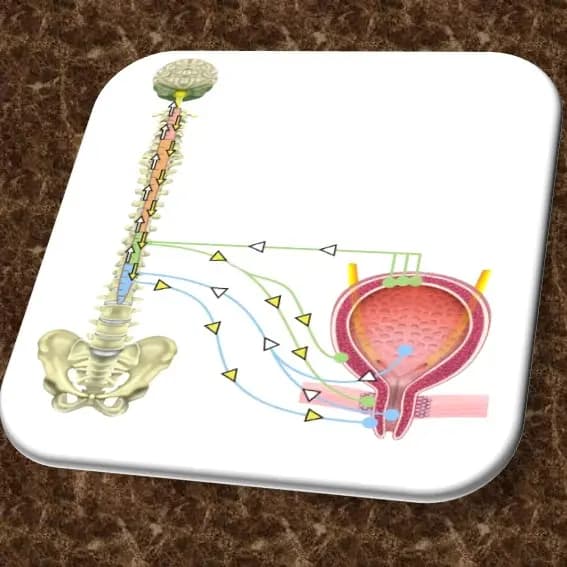
Overview of the Urinary System
Overview of the Urinary System and Its Relation to Spinal Cord Injury Explanation by Dr. Ali Nemati (Neurosurgeon): • The bladder is an elastic storage sac made of smooth muscle that stores urine filtered from the blood by the kidneys. • Urine travels from the kidneys to the bladder via ureters (thin tubes about 10 cm long). The kidneys are located on either side of the spine. • In a healthy system, the bladder remains relaxed until it fills and stretches. When the bladder contains around 160 ml (two cups) of urine, the individual usually feels the urge to urinate. • Once the brain receives the signal that the bladder is full, the bladder contracts, and urine exits through the urethra. In males, the urethra extends to the tip of the penis, while in females it opens slightly above the vaginal opening. • Spinal cord injury (SCI) can disrupt the nerve signals between the brain and bladder. Patients may not sense bladder fullness or may be unable to initiate urination voluntarily. • Depending on the type of injury: o Some patients cannot store urine. o Others may experience sudden leakage due to strong bladder contractions and increased pressure. o A high-pressure bladder with a closed sphincter can cause urine reflux to the kidneys, potentially causing kidney damage. This requires treatment with medication, surgery, or changes in the urinary drainage schedule. o Sphincter weakness may result in continuous urine leakage. Goals of a Urinary Drainage Program for SCI Patients: 1. Maintain high bladder capacity while keeping internal pressure low 2. Prevent urinary tract infections 3. Keep skin and clothing dry 4. Ensure hygienic urine elimination